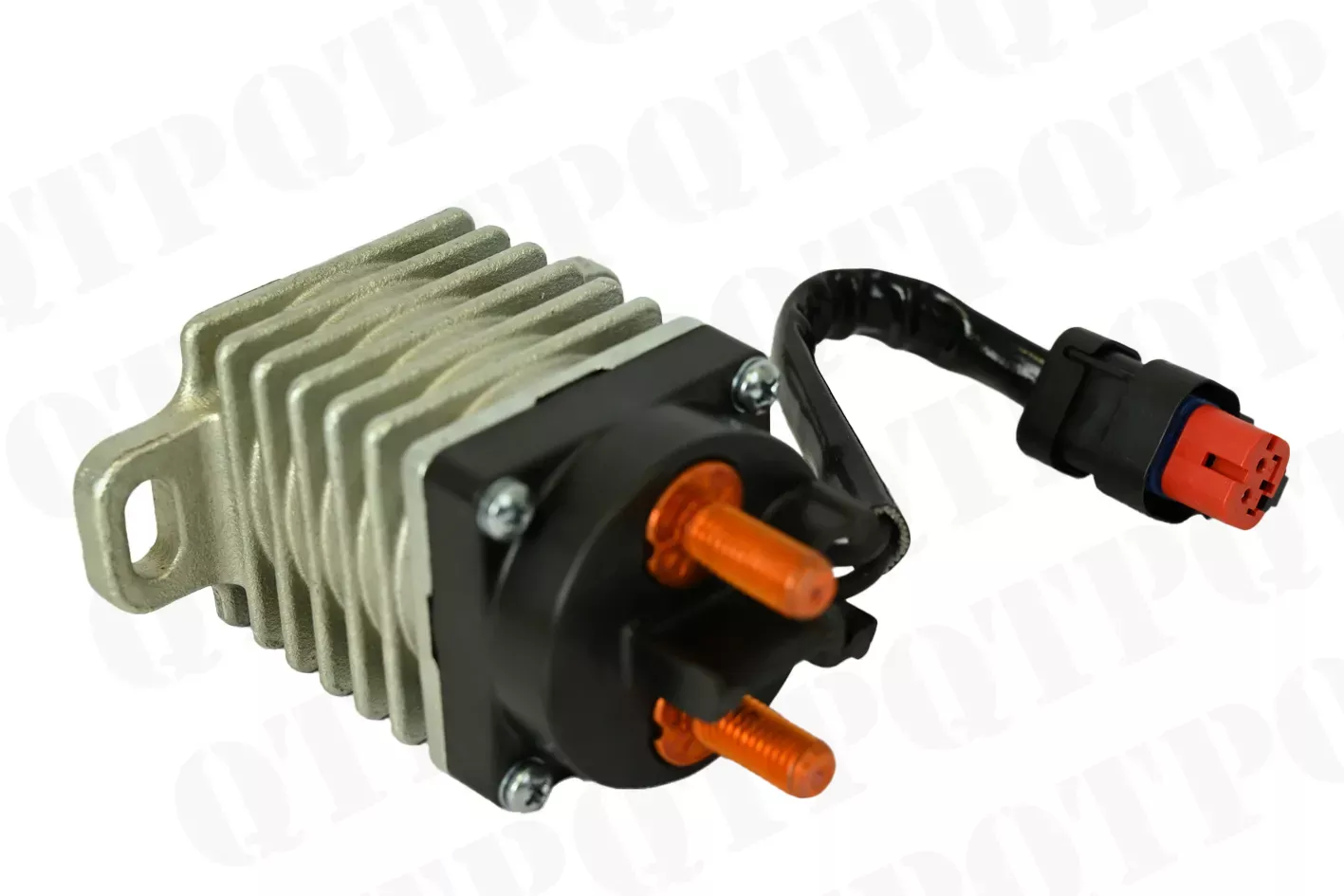
When your John Deere won’t respond to the switches and controls like it should—whether it’s the PTO that won’t engage, hydraulic functions acting up, or electrical systems behaving erratically—chances are good it’s a relay causing the trouble. When you turn the key and nothing happens, this 4-pin starter relay is often the simple fix that gets you back to work. Don’t waste time diagnosing complex electrical problems when a failed relay is frequently the culprit behind no-start conditions and other electrical gremlins. This replacement relay restores proper electrical control to get your equipment operating smoothly again.
What You’re Getting
- Heavy-duty copper contacts designed to handle the extreme current draw of diesel engine starters – often exceeding 200 amps. The electromagnetic coil provides positive engagement without sticking
- Robust construction resists vibration damage common in agricultural applications
- Weather-sealed design prevents moisture intrusion that causes corrosion and failure
- Direct replacement that fits the original mounting location perfectly
Built for Real Farm Work
This relay is engineered for the demanding world of modern John Deere tractors. Your John Deere 6020, 6030, and 7030 series tractors are sophisticated machines equipped with advanced electronic systems that control everything from engine management and transmission operation to precision agriculture features. The 5M, 6M, 5R, and 6R series tractors rely heavily on electronic communication for features like automated functions, display systems, and implement control. These modern tractors use CAN Bus technology to coordinate between multiple electronic modules, and this relay plays a critical role in that coordination.
Made to Last
Farm equipment electrical systems take a beating from dust, moisture, vibration, and temperature swings. Unlike worn relays with pitted contacts, this replacement provides reliable starting power every time you turn the key. The sealed housing keeps the elements out while maintaining consistent performance whether it’s freezing cold or blazing hot.
Installation Notes
Always disconnect battery before relay replacement to prevent accidental shorts. Clean all connections – corrosion causes many “bad relay” symptoms. Most relay swaps take about 15 minutes once you locate the relay box. If you’re still having issues after replacement, check the wiring connections and fuses—electrical problems sometimes travel in groups.